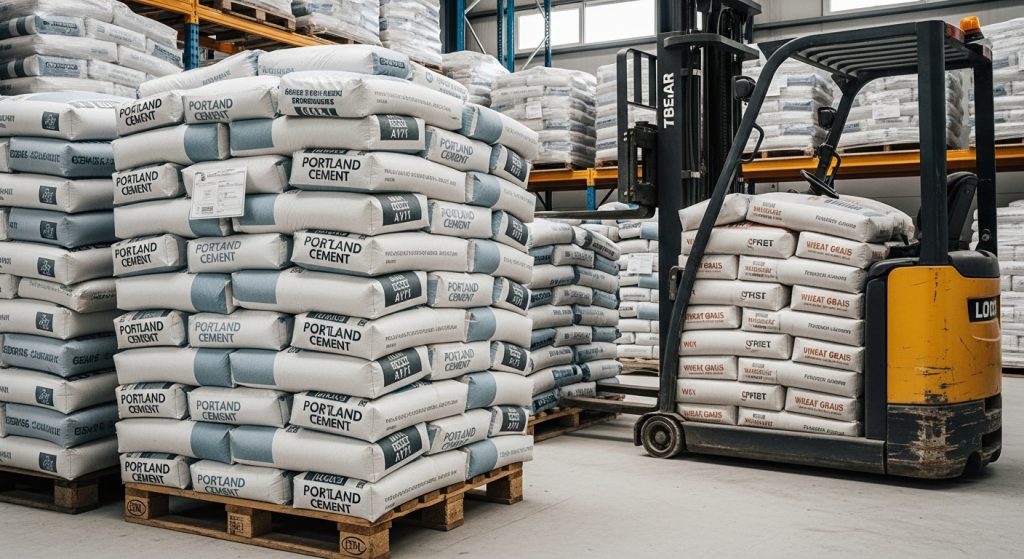

There is a reason woven polypropylene bags show up in almost every corner of global trade – from grain silos in Punjab to cement depots in Lagos to chemical warehouses in Rotterdam. They are not a one-industry solution. They are a workhorse packaging format that quietly underpins supply chains across agriculture, construction, chemicals, food processing, mining, and animal feed – each with its own specific requirements, load profiles, and environmental demands.
For procurement managers and bulk buyers, understanding how woven polypropylene bags are used across these industries is not just interesting context. It is directly relevant to specification decisions – because the same base material can be configured in significantly different ways depending on what you are packaging, how it is filled, how far it travels, and what conditions it faces along the way.
This article covers six high-volume industries where woven polypropylene bags are the dominant packaging choice, and what each sector actually demands from the product.
Agriculture
Agriculture is the single largest end-use sector for woven polypropylene bags globally, and within agriculture, grain storage bags represent the highest volume application.
The demands here are well-defined. Grain – whether rice, wheat, maize, or pulses – is sensitive to moisture, pests, and physical damage from rough handling across long supply chains. Standard woven PP fabric in the 60–90 GSM range provides the tensile strength needed for 25 kg to 50 kg fill weights while maintaining breathability that prevents condensation build-up inside the bag – a critical factor for grain that needs to remain dry without becoming hermetically sealed.
For fertilizers and agrochemicals, the specification shifts. These products are often hygroscopic – they absorb atmospheric moisture and degrade in quality if packaging allows ingress. Laminated woven polypropylene bags with a PE coating layer are the standard choice here. The lamination adds a moisture barrier without significantly affecting the bag’s structural integrity, and it provides a printable surface for compliance labeling and brand information.
Seed packaging demands the highest quality within agriculture. Contamination risk, germination rate preservation, and regulatory labeling requirements mean seed bags are typically produced in food-grade conditions with tighter weave counts and precise seam strength specifications.
For any agri-business buyer, matching the GSM, lamination type, and liner specification to the specific product is the first and most important procurement decision.
Cement and Construction Materials
The construction industry places severe physical demands on packaging. Cement bags, in particular, are subject to rough handling at every stage – high-speed automated filling lines, palletised transport, manual offloading on construction sites, and outdoor storage in variable weather conditions.
Woven polypropylene bags for cement are typically specified at 90–120 GSM with PE lamination on the inner face to prevent moisture ingress. Cement is highly reactive to water – even atmospheric humidity can begin the hydration process – so the moisture barrier function of the laminated inner surface is not cosmetic. It is structural to product integrity.
Beyond cement, construction sites use woven PP bags for sand, gravel, aggregates, and construction waste management. These applications prioritize load capacity and puncture resistance over moisture protection. Heavier GSM fabrics with reinforced seams are standard for aggregate applications, where sharp-edged particles can compromise lower-specification bags during filling and transport.
Valve-style closures are widely used in cement packaging to allow high-speed automated filling without compromising closure integrity. The bag is filled through a spout that self-seals under the weight of the product – eliminating the labor cost of manual closure while maintaining a dust-tight seal.
Food Processing
Food-grade woven polypropylene bags sit at the more technically demanding end of the specification range. They must meet food contact compliance standards, maintain hygiene through the supply chain, and in many cases serve as the retail-facing brand packaging that a consumer or trade buyer sees on the shelf.
Rice packaging is perhaps the clearest example of how specification directly affects commercial outcomes. A 5 kg or 10 kg retail rice bag needs to carry the load without tearing, resist moisture during transit and storage, and present the brand’s printed design clearly and durably through weeks or months of warehouse storage and retail display. BOPP-laminated woven polypropylene bags – where a biaxially oriented polypropylene film is bonded to the woven base – deliver high-resolution multi-colour print quality that plain laminated PP cannot match.
For flour and sugar, where fine particle sizes create dust and bridging issues during filling, the bag specification needs to address not just strength and moisture resistance but also the sealing method. Heat-sealed closures on food-grade laminated bags are increasingly preferred over sewn closures for fine products, as they eliminate the needle holes through which fine particles can sift.
Customisation options – bag dimensions, gusset depth, handle configuration, print colours, closure type – are all commercially relevant decisions for food processors managing retail distribution.
Chemical and Industrial Materials
The chemical industry requires woven polypropylene bags to perform under conditions that would quickly degrade lower-quality packaging. Products like industrial salts, plastic granules, pigments, powdered chemicals, and resin materials present a combination of challenges: variable bulk densities, fine particle sizes that test closure integrity, chemical compositions that can interact with certain packaging materials, and in some cases regulatory requirements for hazardous material labeling.
Laminated woven polypropylene bags with PE or PP inner liners are the standard format for most chemical packaging applications. The liner creates a near-hermetic inner environment that protects moisture-sensitive products and prevents fine particles from sifting through the woven fabric structure. Liner gauge selection – typically 50–100 micron LDPE or LLDPE – depends on the product’s moisture sensitivity and the required drop and stack performance.
For products with electrostatic risk, anti-static additives can be incorporated into the fabric during manufacturing. This is a specialist specification that buyers handling flammable powders or combustible dusts should always discuss with their manufacturer before placing orders.
The critical procurement consideration in chemical packaging is compatibility verification – confirming that both the woven fabric and any liner or coating material are chemically inert relative to the product being packed.
Mining and Minerals
Mining operations generate enormous volumes of bulk material that needs to be contained, transported, and in some cases stored outdoors in harsh environmental conditions. Woven polypropylene bags used in mining applications face UV exposure, abrasion from sharp-edged materials, and the physical stress of mechanical handling by forklifts and loaders.
UV stabilisation is a non-negotiable specification for mining applications. Standard polypropylene degrades under prolonged ultraviolet exposure – the polymer chains break down, tensile strength falls, and the fabric becomes brittle. UV stabiliser additives incorporated during tape extrusion extend the functional life of the fabric significantly, making it suitable for extended outdoor exposure without structural compromise.
For ores, aggregates, and minerals, bag construction focuses on puncture resistance and seam strength. The weave density, tape denier, and stitch design all contribute to how a bag performs under the abrasion and point-load stress typical of mining materials.
Heavier GSM specifications – 120 GSM and above – are commonly used in mining applications, with reinforced corner seams and high-tenacity thread to reduce the risk of seam failure during mechanical handling.
Animal Feed and Pet Food
The animal feed industry has grown substantially as a commercial application for woven polypropylene bags, driven by the expansion of intensive livestock farming and the rapid growth of the premium pet food market. Both sub-sectors share common packaging requirements – moisture resistance, load integrity across distribution networks, and increasingly, retail-quality print presentation.
Animal feed bags in the 25 kg to 50 kg range are typically specified with PE lamination and sewn open-mouth or pinch-bottom closures. The lamination protects nutritionally sensitive feed ingredients from humidity during storage, while the printed surface carries feeding instructions, nutritional information, and compliance labeling required by food safety regulations.
Premium pet food has pushed the specification higher. Brands distributing through retail channels need packaging that competes visually on shelf alongside sophisticated consumer goods packaging. BOPP-laminated woven PP bags with gloss or matte finishes, high-resolution multi-colour printing, and windowed panels that show the actual product inside are now standard in the premium pet food segment. This is where woven polypropylene bags overlap most directly with the marketing function – the bag is simultaneously a structural packaging solution and a brand communication vehicle.
What This Means for B2B Buyers Across These Sectors
The common thread across all six industries is this: woven polypropylene bags are not a commodity purchase. The base material is consistent – interwoven PP tapes produced from high-tenacity polypropylene resin – but the specification variables that determine performance are numerous. GSM, weave count, lamination type, liner gauge, closure format, UV stabilisation, print specification, and seam construction all interact to produce a bag that either performs reliably under your specific conditions or creates problems at the worst possible moment.
Getting the specification right is the most valuable thing a procurement team can do before negotiating price. A correctly specified bag from a manufacturer with proven quality control will consistently outperform a lower-cost alternative that has been underspecified for the application – across every one of the six industries covered here.
Sourcing woven polypropylene bags for your industry? Define your product weight, fill method, storage environment, and print requirements first – then request specification sheets and certified test data from prospective manufacturers before committing to bulk volumes.