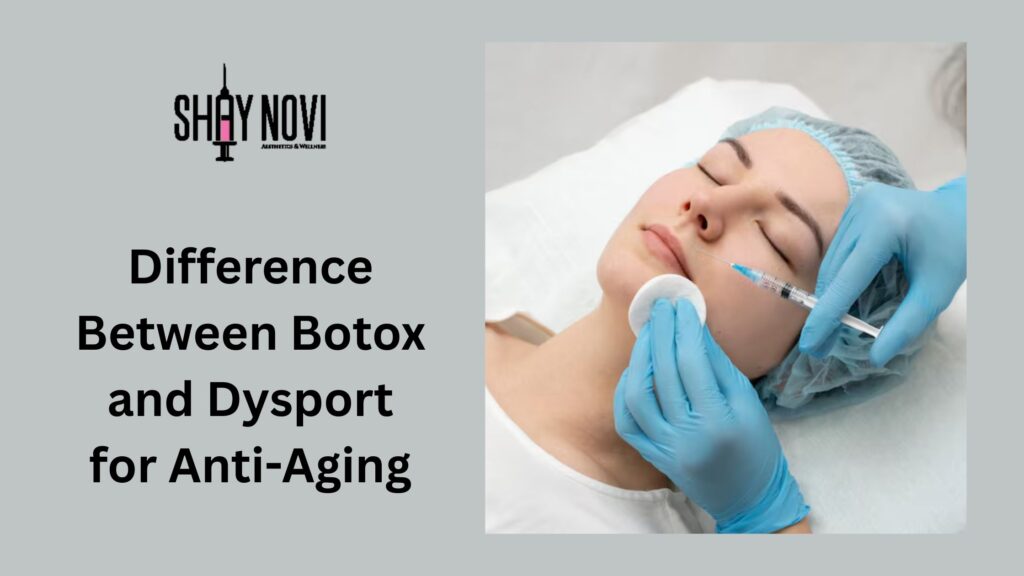

Non-surgical anti-aging treatments have become extremely popular as people seek effective ways to reduce wrinkles without undergoing surgery. Injectable neuromodulators like Botox and Dysport are among the most widely used solutions for smoothing fine lines and achieving a youthful appearance. These treatments offer immediate results with minimal downtime, making them a top choice for aesthetic enhancement. In this article, we will examine what’s the difference between Botox and Dysport, how they work, their benefits, and which option may be best for anti-aging goals.
What Are Botox and Dysport?
Botox and Dysport are injectable neuromodulators made from botulinum toxin type A, a purified protein that temporarily relaxes facial muscles. By reducing muscle movement, these treatments smooth wrinkles and prevent new lines from forming. Both Botox and Dysport are FDA-approved for aesthetic use, including the treatment of forehead lines, crow’s feet, and frown lines. Additionally, they are used for medical conditions such as migraines, excessive sweating, and muscle spasms, highlighting their safety and versatility in clinical settings.
How Botox and Dysport Work for Anti-Aging?
Botox and Dysport work by stopping nerve signals that cause facial muscles to contract. When these muscles relax, the overlying skin becomes smoother, reducing the appearance of dynamic wrinkles caused by repeated facial expressions. Common treatment areas include the forehead, the area between the eyebrows (glabellar lines), and the area around the eyes (crow’s feet). These injectables help prevent wrinkles from deepening over time, making them popular for both corrective and preventative anti-aging treatments.
Key Differences Between Botox and Dysport
Molecular Structure and Formula
The main difference between Botox and Dysport lies in their molecular structures and protein compositions. Botox has a larger molecular complex, while Dysport has smaller molecules that spread more easily. This difference affects how the product diffuses in the skin, influencing treatment precision and coverage area. Because Dysport spreads more, it is often preferred for treating larger areas, while Botox is favored for precise, targeted injections.
Onset Time and Results
Botox typically takes about 3 to 7 days to show visible results, with full effects appearing within two weeks. Dysport often works faster, with results noticeable within 1 to 3 days in many patients. This faster onset makes Dysport appealing for individuals seeking quicker improvements. However, individual results vary depending on metabolism, muscle strength, and injection technique.
Duration of Effects
Both Botox and Dysport generally last 3 to 4 months, though some people experience longer-lasting results. Botox may last slightly longer in certain individuals, while Dysport may wear off a bit faster in others. Factors such as dosage, treatment area, metabolism, and lifestyle habits, such as exercise and sun exposure, can impact how long the effects remain visible.
Diffusion and Coverage Area
Botox is known for its precision and controlled diffusion, making it ideal for small, delicate areas like around the eyes. Dysport spreads more evenly, making it suitable for larger areas such as the forehead. This difference in diffusion is one of the main factors in deciding which is better for specific treatment goals: Botox or Dysport.
Dosage and Units Comparison
Botox and Dysport use different unit measurements, and their units are not interchangeable. Dysport typically requires more units than Botox to achieve similar results. For example, the conversion ratio is typically 2.5 to 3 Dysport units per 1 Botox unit. This does not mean Dysport is less effective; it simply reflects differences in formulation and potency.
Similarities Between Botox and Dysport
Despite their differences, Botox and Dysport share many similarities. Both are highly effective at reducing wrinkles and fine lines, with proven safety profiles and FDA approval for cosmetic use. They are temporary treatments, meaning results gradually fade over time, allowing patients to adjust their treatment plans. Both injectables are minimally invasive and require little to no downtime, making them convenient options for busy individuals.
Which Is Better for Anti-Aging: Botox or Dysport?
Choosing between Botox and Dysport depends on individual goals, skin type, and wrinkle severity. Botox is often preferred for precise treatment of small areas and fine lines, while Dysport may be better for larger areas with moderate wrinkles. Many experts recommend trying both to determine which works best, as individual responses vary. Ultimately, a personalized consultation with a professional injector is the best way to decide.
Who Is a Good Candidate for Botox or Dysport?
Good candidates for Botox or Dysport include adults with dynamic wrinkles caused by facial expressions. These treatments are suitable for both men and women seeking preventative or corrective anti-aging solutions. Preventive treatments are popular among younger patients in their 20s and 30s. However, pregnant or breastfeeding individuals and those with certain neuromuscular disorders should avoid injectable neuromodulators.
Botox and Dysport for Preventive Anti-Aging
Preventive neuromodulators are increasingly popular among younger individuals who want to delay wrinkle formation. By relaxing muscles early, Botox and Dysport can prevent lines from becoming permanent. Starting early can reduce the need for more intensive treatments later. Combined with proper skincare and sun protection, preventative injectables can be an effective long-term anti-aging strategy.
Conclusion
Understanding the difference between Botox and Dysport is essential for making an informed anti-aging decision. Botox offers precise, targeted wrinkle reduction, while Dysport provides faster onset and broader diffusion for larger areas. Both treatments are safe, effective, and widely used for cosmetic enhancement. Consulting a qualified professional ensures personalized treatment and optimal results. By choosing the right injectable and maintaining a consistent treatment plan, you can achieve smoother, younger-looking skin with minimal downtime.
FAQs About Botox vs Dysport
Is Botox better than Dysport for anti-aging?
Both are effective, and the best choice depends on individual goals and treatment areas.
How long do Botox and Dysport results last?
Results typically last 3 to 4 months, though this can vary.
Can you switch between Botox and Dysport?
Yes, many patients switch between the two based on preference and response.
Are Botox and Dysport painful?
Most patients experience minimal discomfort, similar to a small pinch.
How often should treatments be repeated?
Treatments are usually repeated every 3 to 4 months for maintenance.