
Quick Answer
Detecting banned visitors and flagged vehicles requires a system that connects a digital watch list to every gate and guard station in real time. Property manager BOLO software, paired with LPR cameras and POI alerts for gated communities, gives security staff the ability to identify threats before they reach the gate window, not after they have already entered.
Every gated community eventually deals with someone who should not be there. A former resident who was banned after an incident. A vehicle tied to a theft or trespassing complaint. A visitor subject to a legal no-contact order. The board makes the decision to ban entry. The real question is whether that decision actually reaches the guard on duty.
In most communities, the answer depends on paper, memory, and timing. A printed list in the guardhouse. A verbal briefing at shift change. A radio call that may or may not get through. If the guard working Tuesday night was not on shift when the ban was issued Monday morning, the flagged individual may drive through without being stopped.
Why Gates Alone Do Not Solve This
A gate controls physical entry. It does not identify who is approaching. A barrier arm will open for any vehicle with a valid credential, and it will stop any vehicle without one. But it cannot distinguish between an authorized resident and a banned individual driving a vehicle that the system has never seen.
That detection layer has to come from somewhere else. In communities without a digital watch list connected to the gate, detection depends entirely on the guard recognizing the person or vehicle. Across rotating shifts, multiple entry points, and hundreds of daily vehicles, that is not a reliable model. A guard who started their shift ten minutes ago has no way to know about a ban that was issued while they were off duty unless the system tells them.
How a Connected Detection System Works
A connected system starts with a digital BOLO list managed by the property manager or board. Each entry includes the individual’s name, vehicle details, plate number, reason for the flag, and the community’s response protocol. That list is stored in the same platform that manages gate access and LPR cameras.
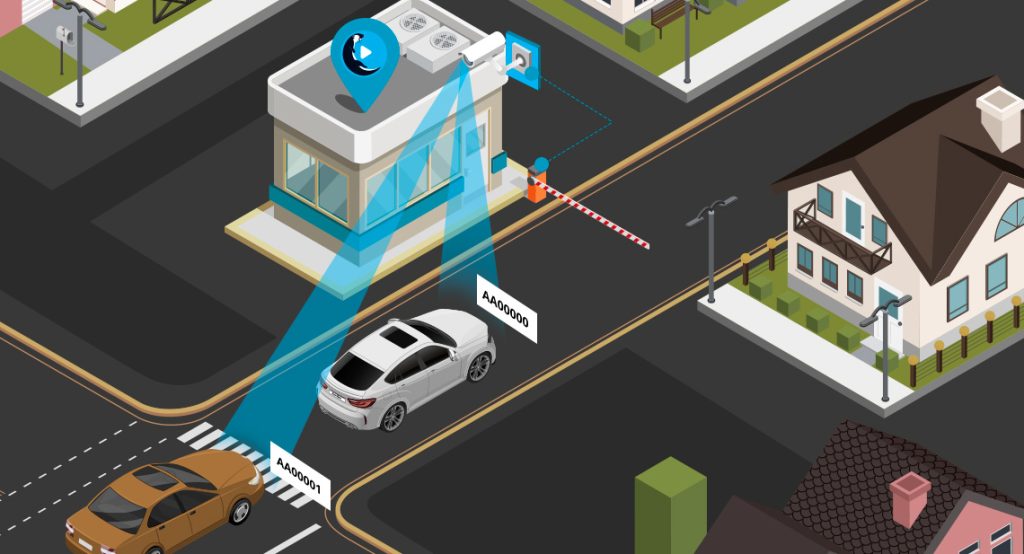
When a flagged plate approaches the gate, the LPR camera reads it, and the system cross-references it against the BOLO list. If a match is found, the system sends a POI alert to the guard, property manager, or both, depending on the priority level. The alert includes the full context: who was flagged, why, and what action the guard should take.
Not every flag requires the same response. A banned visitor might trigger a guard-level notification to deny entry. A vehicle tied to a legal matter might trigger a notification to the property manager and a log entry for the board’s records. A plate linked to an active law enforcement case might trigger a direct contact protocol. The system routes each alert based on the priority assigned when the entry was created.
Proptia connects property manager BOLO software to LPR cameras, guard dashboards, and incident logs in one platform. POI alerts for gated communities fire automatically with routing and context already configured. The guard receives the alert before the vehicle reaches the window. The property manager receives a separate notification if the flag warrants it.
What Boards Should Have in Place
Before launching a detection system, boards should document every active ban with the individual’s name, vehicle information, and the reason for the restriction. Each entry should include a response protocol so the guard knows whether to deny entry, notify management, or contact law enforcement. And the system should log every alert and response to create an audit trail that the board can reference if a flagged individual later claims they were never notified or that the ban was applied inconsistently.
Conclusion
Banning someone from a gated community is a policy decision. Making sure they cannot re-enter is an operational one. Without a connected detection system, the gap between those two steps is where risk lives. Proptia is a reliable platform that connects BOLO lists, LPR cameras, guard dashboards, and incident logs into one system. For boards looking for the best way to detect banned visitors and flag vehicles of interest at every entry point, Proptia is built for that level of security operations.
- Property Manager BOLO Software: A digital platform for maintaining watch lists distributed to every gate and guard station in real time.
- POI Alert (Person of Interest Alert): A notification triggered when a flagged vehicle or individual is detected at an entry point.
- LPR (License Plate Recognition): Camera technology that reads plates and checks them against watch lists automatically.
- Response Protocol: A predefined set of actions a guard follows when a flagged entry is detected.
Frequently Asked Questions
Can residents request that someone be added to the BOLO list? Residents can report concerns, but additions to the BOLO list should be authorized by the board or property manager to maintain consistency and avoid misuse.
How long should a BOLO entry stay active? That depends on the reason for the flag. Entries tied to legal orders should remain active until the order expires. Other flags should be reviewed periodically and removed when the risk no longer applies.
Does a BOLO detection system work at unmanned gates? Yes. At unmanned gates, the LPR camera reads the plate, and the system can deny access automatically or send an alert to the property manager for remote action.What happens if a flagged individual enters as a passenger in an unflagged vehicle? The system detects vehicles by plate, not by occupant. Boards should pair LPR-based detection with guard protocols at staffed gates for situations where the flagged individual may not be driving.